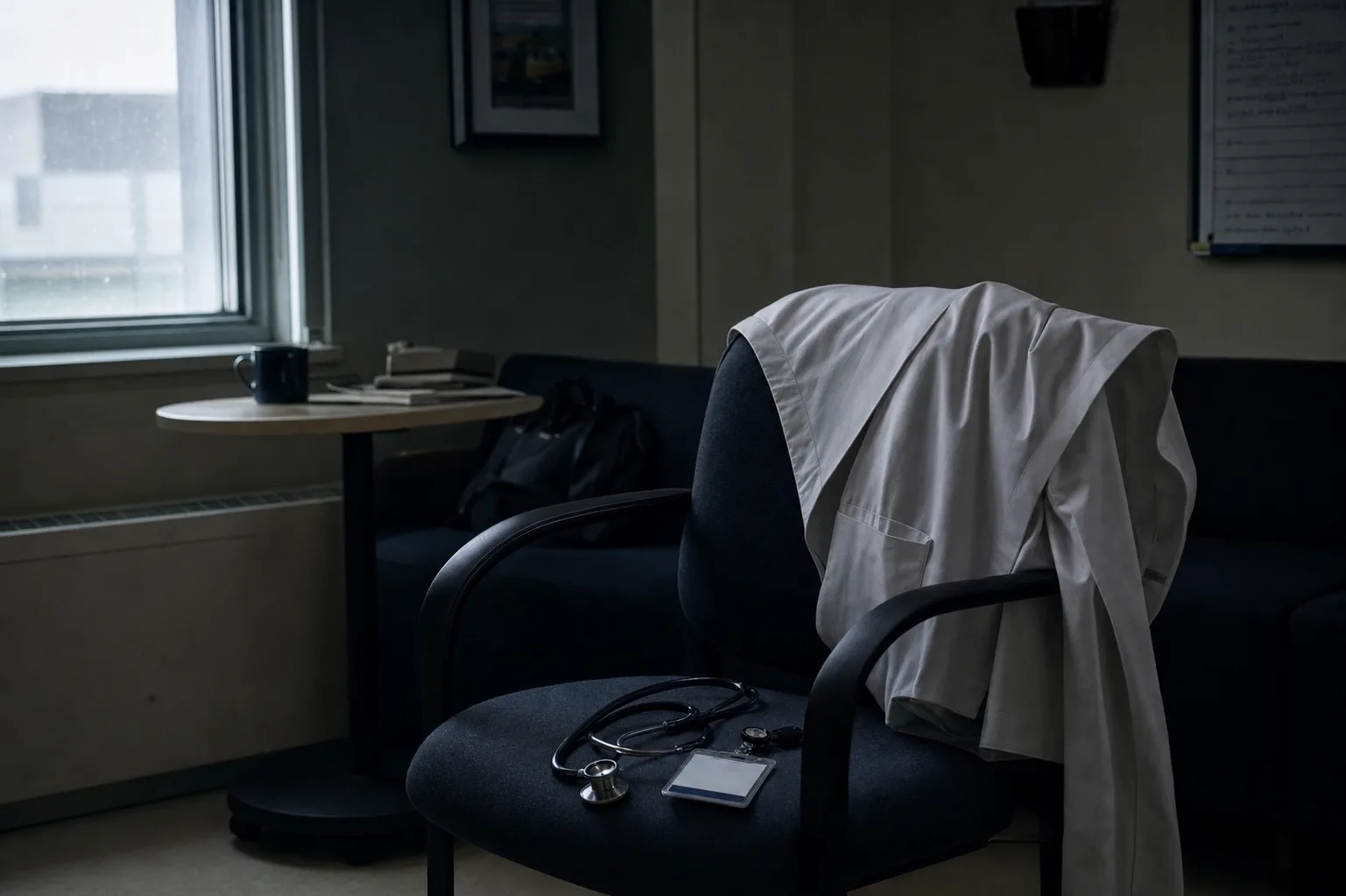
I am not a whistleblower and I am not an activist. I was a resident physician who showed up, took care of patients, and expected the process in the handbook to apply to me the way it says it does.
It didn’t. So here we are.
A note on what is missing from this page. My matter is still pending, so my name, my program, my institution, my specialty, my state, and the dates have all been left out on the advice of counsel. Nothing else about the account has changed.
Who I Was Before Any of This
I am an American citizen and an international medical graduate. I am a Muslim physician of South Asian descent. I chose my specialty because I wanted to do the unglamorous work in the places that need it most.
My record was not a mystery to anyone. I had been promoted with certified competence in all six ACGME core competencies. My competency committee had rated me as meeting expectations in every domain and had written that I showed real promise. The institution had credentialed me for the kind of procedure I would later be accused of mishandling. The hospital had given me an award for clinical care. Across dozens of evaluations, not one attending ever wrote that I was at risk of failing a rotation.
There was one recurring problem in my file, and I am not going to pretend otherwise. I was sometimes late. I was warned about it, and I worked on it, and later evaluations said so.
There was one other thing in my file. During intern year, a faculty evaluation reached for my religious fasting as the explanation for my performance, and suggested I should have taken it to HR. Nobody offered an accommodation. Nobody started a conversation about one. It went into my permanent academic record instead. I let it go at the time. I was an intern. You let things go.
One Night
I was called into a meeting about concerns from a rotation I had finished weeks earlier, concerns nobody had raised with me while they were happening. The meeting was scheduled for the hour immediately before I started an overnight shift.
That night I was the only resident covering a large inpatient service and the intensive care unit. It was the hardest shift of my career, and I said exactly that to my team in writing the next morning. Late in it, standing at a bedside with consent obtained and the kit already open, I felt myself go weak. Not sick. Not impaired. Fatigued in a way I had never felt before.
So I stopped. I told the nurse and I told the patient. Nothing was started and nothing was attempted. I handed the procedure to the incoming team and told them why at sign-out. The nurses who were in the room documented that nothing had been done.
I made a safety decision. I stopped myself. That is supposedly the thing we are trained to do.
What Happened Next
The following afternoon I was placed on administrative leave and ordered to occupational health in another city, with barely enough notice to get into the car. I was handed forms and asked to sign them without being told what they were. Every test they ran came back negative.
I explained what had happened: the meeting, the solo coverage, the sleep. I also raised, on the record, how the program had handled my religious observance. Then I went out on protected medical leave.
While I was out and unable to respond, my case was presented to the committee that decides these things. I was cleared to return to work and placed back on leave the same day. A hearing was set on very short notice. I could bring a peer. My attorney was permitted in the room at a later stage, but not permitted to speak or ask a single question.
Then came the offer that residents in this situation almost always get. Resign quietly, and none of it follows you. Refuse, and all of it does. There was a deadline, set for a morning two days away. I asked to read the documents behind the recommendation so that I could make an informed decision about my own career. That was denied. I did not resign.
Some weeks later I was terminated for cause under a contract provision, in a letter that identified no clinical failure, no conduct violation, and no facts. I had been cleared to work more than a month before it arrived. My internal appeal was denied in a single paragraph that made no findings on the questions the institution’s own rules required it to decide.
The Pattern
What it actually looks like
I am leaving my specifics out of this page. What is left is the shape of it, and the shape is what other residents keep describing back to me.
Concerns you have never heard about surface all at once, weeks after the rotation they came from.
A meeting or a shift is arranged so that you walk in with no time to prepare and no time to recover.
The moment you exercise judgment about your own safety, it is recorded as a deficiency rather than a decision.
The proceeding moves forward while you are out on protected leave and cannot answer it.
You are cleared to work, and kept off the schedule anyway.
A resignation offer arrives with a deadline, and the documents you would need in order to evaluate it are withheld.
Your attorney may attend, but may not speak.
The final decision is short, cites a provision, and makes no findings.
Why I’m Doing This
I am not going to argue my own case on a website. My matter is ongoing, my attorney would rather I said less, and the details of one person’s bad year are not the useful part anyway.
This is the useful part. Nearly every resident I have spoken to since this began has a version of the same story. Notice that arrives too late to matter. A hearing that moves while you are out. An attorney who can attend but not speak. A choice with a deadline and no information. And underneath all of it, the quiet thing nobody writes down twice: the fasting, the name, the accent, the assumption.
Residents do not fight this. Not because they are wrong, and not because they are weak. They do not fight because they are exhausted, because they are on a visa or a loan or a schedule, because they have been told the program director controls the rest of their life, and because nobody ever told them that the handbook they were handed on day one is a set of promises rather than a decoration.
The only reason I understood any of that in time was that I got counsel early, put things in writing, and kept my own records.
So I decided to stop treating this as one person’s bad year.
What we are building here is the thing I needed and did not have. What to do the day you are pulled off service. What administrative leave actually means. What a program has to do before dismissal is even on the table. Why you rarely resign. What to ask for in writing, and when. How medical leave and religious and disability accommodation interact with an academic proceeding. And how to keep a record that cannot be rewritten later.
I do not need anyone to feel sorry for me. I would simply prefer that the next resident who stops a procedure because they are too tired to do it safely does not lose a career over it.
If you are reading this because something has already started, a meeting nobody would explain, a leave nobody will put in writing, a hearing where your lawyer has to sit silently, then reach out. Early. Before you sign anything.
You are not the first one. That is rather the point.
This account was written by a resident physician who is remaining anonymous while the matter is pending. It is a deliberately general description of that physician’s own experience. Individuals, institutions, programs, locations, and dates are omitted, and nothing on this page is a statement of legal claims or a description of any legal position. It is not legal advice and creates no attorney-client relationship.